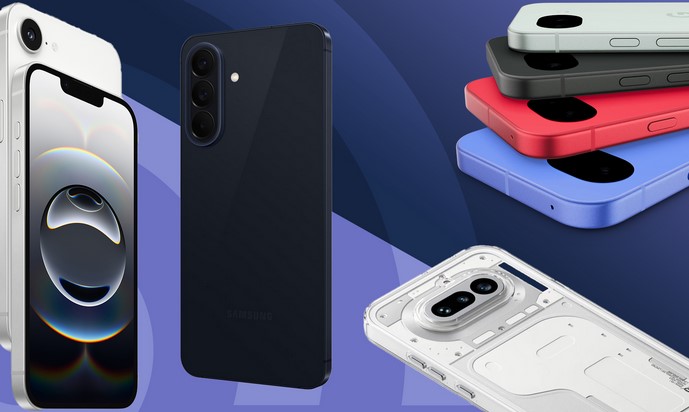

Budget 5G Smartphones Offering Great Value

Source:https://cdn.mos.cms.futurecdn.net

Imagine standing in the middle of a bustling morning commute, trying to load your navigation app or stream a critical work presentation, only to watch the loading spinner wheel spin indefinitely. Your 4G device is choked by network congestion, suffocating in a sea of data traffic.

Just a few years ago, breaking free from this digital bottleneck meant dropping nearly $1,000 on a flagship device. But the tech landscape of 2026 has brought a massive paradigm shift. High-speed cellular tech has completely democratized, and finding a highly capable smartphone no longer requires sacrificing a month’s rent.

Over my ten years spent building platforms and writing within the tech and healthtech hardware sectors, I’ve handled hundreds of mobile devices. I’ve watched entry-level phones evolve from plasticky, lagging pieces of e-waste into sleek, responsive powerhouses.

If you are looking to upgrade without breaking the bank, let’s look past the marketing hype and dive into the budget 5g smartphones that are delivering genuine, undeniable value right now.

Demystifying the Hardware: What Does “Value” Mean Today?

When shopping in the budget-to-midrange territory, manufacturers will attempt to distract you with high megapixel counts or flashy colors. To make an informed purchase, you have to understand how a phone balances its internal components.

Think of your smartphone as a high-efficiency restaurant kitchen:

The Kitchen Analogy: The Chipset (SoC) is the head chef, dictating how fast tasks get processed. The RAM is the size of the prep table; if it’s too small, the chef keeps stalling because there’s no room to work. The Refresh Rate (Hz) is the speed of the waiters—a 90Hz or 120Hz screen makes the service feel incredibly smooth, even if the kitchen is working at normal speeds.

Top Budget 5G Smartphones Vetted for 2026

The entry-level market is fiercely competitive. Brands are squeezing premium tier features—like vibrant OLED panels and multi-year security support—into ultra-affordable price brackets. Here are the absolute standout performers available today.

Smartphone Best For Key Technical Specs Target Price
Samsung Galaxy A17 5G Longevity & Display Exynos 1330, 90Hz AMOLED, 6-Year Support Under $200
Motorola Moto G Power 5G (2026) Durability & Clean Software Snapdragon 6 Gen 3, IP69 Water Resistance, 8GB RAM Around $300
Xiaomi POCO X7 Pro 5G Budget Mobile Gaming Dimensity 8400 Ultra, 120Hz Display, 90W Charging Mid-Range Value
OnePlus Nord CE 5 Unrivaled Battery Life High-Efficiency SoC, 33-Hour Tested Stamina Mid-Range Value

1. Samsung Galaxy A17 5G — The King of Long-Term Support

Samsung has completely redefined what a sub-$200 phone can offer, making the Galaxy A17 5G an absolute default recommendation for beginners.

  • The Big Win: Samsung is promising six years of security upgrades and five major Android OS updates on this device. Combined with a beautiful, punchy 6.7-inch AMOLED display running at 90Hz, this phone stays relevant and safe far longer than any budget competitor in history.

  • The Catch: Avoid the baseline 4GB RAM configuration if you multitask heavily. Opt for the 6GB or 8GB variant to keep the user experience completely lag-free.

2. Motorola Moto G Power 5G (2026) — The Industrial Workhorse

Motorola continues its legacy of delivering clean, bloatware-free software with an incredibly rugged chassis designed for real-world accidents.

  • The Big Win: This device sports an IP68/IP69 ruggedness rating. That level of water and dust protection is almost unheard of at this price point; it means the device can survive complete immersion and even high-pressure water jets.

  • The Catch: It utilizes an LCD panel rather than an OLED screen. While it is sharp and runs smoothly at 120Hz, colors will look a bit flatter compared to Samsung’s displays.

3. Xiaomi POCO X7 Pro 5G — The Flagship Killer Alternative

If you play mobile games or run heavy applications, the POCO sub-brand remains the undisputed champion of raw processing power per dollar.

  • The Big Win: Powered by the formidable MediaTek Dimensity 8400 Ultra chipset paired with blazing-fast 90W hyper-charging, this device effortlessly tears through high-end mobile games and heavy multitasking workflows without breaking a sweat.

  • The Catch: Xiaomi’s Android skin features a fair amount of pre-installed apps (bloatware) out of the box that you will need to spend fifteen minutes uninstalling and configuring to your liking.

Spec Architecture: Finding Your Personal Sweet Spot

Don’t buy a phone just because it ranks high on a generic list. Map the device’s main strengths directly to what you actually do every single day.

                    IDENTIFY YOUR DAILY MOBILE NEED
                                   |
         +-------------------------+-------------------------+
         |                                                   |
   DAILY UTILITY & LONGEVITY                           PERFORMANCE & MEDIA
 (Socials, Banking, Web Browsing)                     (Gaming, Streaming, Video)
         |                                                   |
         v                                                   v
   SAMSUNG GALAXY A17                                  POCO X7 PRO / MOTO G
   - Focus: 6 years of software patches                - Focus: High-performance chips
   - Benefit: Safe financial transactions              - Benefit: Lag-free high FPS gaming

Pro Insights for Smart Mobile Buyers

💡 Tips Pro: Prioritize UFS Storage Over MicroSD Expansion

Many modern budget devices are phasing out expandable storage slots. When buying, pay attention to the storage standard. Look for UFS 3.1 or UFS 4.0 storage rather than older eMMC standards. Faster internal storage speeds mean apps open instantly and your 5G download streams don’t choke while saving files to your device.

⚠️ Check Your Network’s 5G Bands

Not all budget 5g smartphones support every single cellular frequency. Cheap international versions of phones sometimes lack specific network bands (like mid-band N77 or mmWave) used by regional carriers. Always cross-verify the phone’s technical spec sheet with your network provider’s bands to ensure you actually get the blistering speeds you are paying for.

Final Verdict: Value has Shifted

We have finally reached a point in consumer technology where spending over $800 on a mobile device is a luxury, not a technical necessity. For reliable daily driving, secure banking, and stunning media consumption, devices like the Galaxy A17 5G or Moto G Power provide 90% of the flagship experience for less than a third of the cost. They represent a brilliant, logical intersection of cost-efficiency and modern engineering.

What’s Most Important to You in a Smartphone?

Are you looking for a device that will last you for the next five years with continuous security updates, or are you looking for raw processing power to handle gaming and heavy media creation? Drop a comment below with your target budget and current mobile setup, and let’s figure out your perfect hardware match!

disegnorecad.net creates beautiful rendering esterni for homes. A great help for real estate agencies and construction companies to improve their sales. the best free landlord property management software number one rated by G2.

Cyber Security News 2026: Key Trends and Threats

Source:https://res.cloudinary.com

Just a few weeks ago, millions of students worldwide sitting down for their final exams encountered a digital wall. The global learning platform Canvas was slammed offline by a massive data breach orchestrated by the threat group ShinyHunters, allegedly exfiltrating over 3.6 terabytes of data and affecting thousands of institutions. A few days later, a voice-phishing attack successfully tricked a major telecom employee into handing over access credentials, putting nearly 5 million user accounts at risk.

If you think your digital footprint is safe just because you use a strong password, the reality of 2026 is here to prove you wrong.

Over my 10+ years working within the technology and healthtech infrastructure ecosystems, I have seen security paradigms morph continuously. But 2026 is drawing a definitive line in the sand. The old era of the “network perimeter”—where we built walls around data and assumed everything inside was safe—is officially dead. Today, the threats are faster, highly automated, and aggressively personal. Let’s strip away the corporate jargon and look at the actual trends and threats dominating the cyber security news 2026 landscape.

The Rise of Agentic AI: The Bad Guys Have Digital Twins

We’ve talked about hackers using basic artificial intelligence to write cleaner phishing emails for a couple of years now. However, the biggest technical shockwave of 2026 is the weaponization of Agentic AI.

To understand why this is a nightmare for cybersecurity teams, let’s use a simple comparison.

The Thief vs. The Autonomous Drone Analogy: Traditional hacking is like a human burglar scoping out a building, finding an open window, and climbing in. It takes time, planning, and manual effort. Agentic AI, on the other hand, is like deploying an autonomous drone swarm. You give it a single objective—”find a way inside”—and the AI independently scans thousands of open doors, tests vulnerabilities, mutates its own code to evade firewalls, and executes the robbery in milliseconds without any human instruction.

According to recent threat dynamics reports, bad actors are deploying these autonomous AI agents to continuously probe Application Programming Interfaces (APIs) looking for microscopic cracks that human developers missed. The time window between a zero-day vulnerability being disclosed and an AI agent weaponizing it has shrunk from weeks to minutes.

The Identity Battleground: The Human Element is Exploding

If you look closely at the major breaches making headlines, a startling pattern emerges. Hackers aren’t always cracking deep code; they are simply logging in using stolen or manipulated identities. The Verizon 2026 Data Breach Investigations Report confirms that 62% of all data breaches now involve the human element.

1. Advanced Voice Phishing (Vishing) and Deepfakes

Video and audio are no longer reliable methods for verifying identity. Attackers are currently using real-time voice cloning and deepfakes to execute social engineering schemes. We are seeing cases where HR departments are fooled during onboarding processes by entirely synthetic employee profiles, and finance teams are targeted by vishing calls that sound identical to their company’s executives.

2. Supply Chain and Third-Party Vulnerabilities

You might have top-tier security protocols, but what about the software vendor your company uses to manage payroll or customer databases? As IBM’s X-Force threat intelligence team recently noted, adversaries have figured out they don’t need to break down your front door when they can walk through a supplier’s backdoor with valid, compromised credentials. A breach at a minor vendor can instantly cascade into a crisis for millions of end-users.

Identity-First and Zero Trust: The New Defensive Blueprint

With the perimeter dead, how is the industry fighting back? The strategy for 2026 has completely shifted from prevention to resilience.

                OLD SECURITY MODEL (Perimeter-Based)
       [ Firewalls & Walls ] ---> Inside the Wall = Trusted Implicitly
       
                2026 SECURITY MODEL (Zero Trust Architecture)
       [ Real-Time Risk Signals ] -> Geolocation -> Device Health -> Behavior
                        *ALWAYS VERIFY, NEVER TRUST*

Organizations are rapidly adopting an Identity-First Security model rooted in absolute Zero Trust Architecture. In 2026, this means every single access request—whether it comes from the CEO sitting in the corporate headquarters or a remote contractor working from a coffee shop—is treated as potentially hostile.

Instead of relying on static passwords, access is granted based on real-time risk signals:

  • Behavioral Biometrics: Is the user typing or moving their mouse in a pattern that matches their history?

  • Contextual Geolocation: Did this user log in from New York ten minutes ago, and now they are attempting an access request from Europe?

  • Device Health Attestation: Is the laptop requesting access running updated patches, or is it showing signs of an active malware infection?

Pro Insights for Digital Survival

💡 Tips Pro: Move to Out-of-Band Verification

If your organization handles sensitive financial transfers or critical data changes, do not rely on standard live video or audio calls for authorization anymore. Implement a mandatory “out-of-band” confirmation step. This means verifying the transaction through an independent, encrypted secondary channel (like a physical hardware token or an authenticated enterprise push notification) that cannot be replicated by an AI deepfake.

⚠️ Beware of “Shadow AI” Governance Gaps

Employees looking for productivity shortcuts are constantly pasting corporate data, proprietary code, and sensitive patient or customer records into unauthorized public AI chatbots. This is a massive, quiet data exfiltration vector. These inputs often feed directly into public LLMs, inadvertently exposing your data to the dark web or future training sets. If you don’t have a strict governance policy for AI tool usage, your data is already leaking.

Looking Forward: Navigating a Metamorphic Landscape

The cybersecurity environment of 2026 is fast-paced and intensely volatile, driven by a combination of geopolitical tensions and unprecedented technological acceleration. We are watching cybercriminals shift their focus from traditional ransomware extortion to large-scale data leaks and cyber-enabled fraud.

However, this isn’t a reason to panic; it’s a call to modernize. The tools to defend our data are evolving just as fast as the threats. By focusing heavily on continuous threat exposure management, building a human-centric security culture, and enforcing strict zero-trust parameters, we can easily stay ahead of the curve.

How Resilient is Your Digital Setup?

Are you still relying on basic passwords, or have you integrated hardware tokens and passkeys into your personal and professional workflows? Let me know what security challenges you are facing this year. Drop a comment below, and let’s map out how you can build a truly resilient defense against the threats of 2026!

Best Laptops for Machine Learning in 2026

Source:https://helios-i.mashable.com

Last week, a junior data scientist pinged me on Slack, desperate. He had tried to fine-tune a modest 7-billion parameter local Large Language Model (LLM) on his sleek, ultra-thin ultrabook. Midway through the second epoch, his laptop didn’t just freeze—it thermal-throttled so aggressively that the chassis was physically hot enough to fry an egg, and the process crashed with the dreaded Out of Memory (OOM) error.

In my ten years of working at the intersection of healthtech and high-performance computing, I’ve seen this exact story play out a hundred times. People buy a laptop based on flashy design or pure CPU speed, completely ignoring how machine learning actually punishes hardware.

Selecting the best laptops for machine learning isn’t about buying the most expensive machine on the shelf. It’s about matching your hardware configuration to your specific data pipeline. Let’s break down what actually moves the needle in 2026 and look at the absolute best rigs available for beginners and intermediate practitioners.

The Core Spec Hierarchy: What Actually Matters?

When you are buying a machine for AI development, the marketing stickers on the box will try to sell you on screen resolution or NPU (Neural Processing Unit) “TOPS” numbers. Don’t fall for it.

To understand what you need, think of training a neural network like cooking a massive banquet dinner:

The Kitchen Analogy: The CPU is your chef—it coordinates everything. The SSD storage is your pantry—it holds all your raw ingredients (datasets). The RAM is your kitchen counter space—if it’s too small, you can’t chop veggies and roll dough at the same time. Finally, the GPU VRAM is a specialized high-speed blender; without it, certain complex sauces take hours to blend by hand.

The Best Laptops for Machine Learning in 2026

The hardware landscape has shifted dramatically. NVIDIA’s next-gen Blackwell RTX 50-series GPUs have hit the mobile market, and Apple’s M4 and M5 unified memory architectures have redefined how we handle large models locally. Here are the top contenders that I have vetted for real-world ML workloads.

Laptop Best For Key Specs Price Range
ASUS ROG Strix G16 Overall Best Value Intel Core i7, 16GB-32GB RAM, RTX 5060 (GDDR7) Budget to Mid
MacBook Pro 16″ (M4/M5 Max) Unified Memory Powerhouse Up to 16-Core CPU, Up to 128GB Unified RAM Premium
Lenovo ThinkPad P16 Gen 3 Desktop-Class Workstation Intel Ultra 9, 64GB RAM, NVIDIA RTX PRO 5000 Enterprise
ASUS ROG Zephyrus G16 Deep Learning Portable AMD Ryzen AI 9, 32GB RAM, RTX 5070 Ti Mid-High

1. ASUS ROG Strix G16 — The Unbeatable Budget Entry

If you are a student or a beginner jumping into TensorFlow and PyTorch, this machine is the absolute sweet spot.

  • The Big Win: It packs NVIDIA’s latest RTX 5060 GPU utilizing ultra-fast GDDR7 memory. Because deep learning libraries rely heavily on NVIDIA’s CUDA architecture, having a dedicated green-team card is non-negotiable if you want to train neural networks locally.

  • The Catch: It looks like a gaming laptop, complete with RGB lighting, and the battery life maxes out at around 4 hours under development workloads.

2. Apple MacBook Pro 16″ (M4/M5 Series) — The Local LLM King

Apple Silicon handles machine learning differently, and it has completely stolen the hearts of intermediate developers who work with large models.

  • The Big Win: Unified Memory Architecture. In a typical Windows laptop, your GPU VRAM is capped (usually 8GB to 16GB). If a model is 20GB, it won’t fit. Apple’s unified memory allows the GPU to utilize up to 128GB of RAM as VRAM. If you want to run or prototype local LLMs or Stable Diffusion pipelines without quantization compromises, this is the gold standard.

  • The Catch: No native CUDA support. You’ll be relying on Apple’s MLX framework or Metal Performance Shaders (MPS). It is also heavily expensive.

3. Lenovo ThinkPad P16 Gen 3 — The Heavyweight Enterprise Choice

For intermediate practitioners handling massive local data preprocessing, tabular data engineering, and heavy Apache Spark pipelines.

  • The Big Win: Utter reliability and unparalleled expandability. It features the NVIDIA RTX PRO 5000 workstation card and can be expanded up to an insane 192GB of DDR5 RAM. Its cooling solution is built like a tank, ensuring no thermal throttling during an all-night local training run.

  • The Catch: It weighs over 2.5 kg. This is a “portable desktop,” not something you comfortably work with on an airplane tray table.

Technical Breakdown: GPU VRAM vs. Unified Memory

If you are confused between choosing a Windows RTX machine or an Apple Silicon Mac, look closely at your primary day-to-day work:

                  YOUR MACHINE LEARNING WORKFLOW
                                |
        +-----------------------+-----------------------+
        |                                               |
  DEEP LEARNING / CUDA                              LOCAL LLMs / 
(PyTorch, TensorFlow, CNNs)                    LARGE DATASETS (Pandas)
        |                                               |
        v                                               v
NVIDIA RTX (e.g., RTX 5070)                      APPLE SILICON (M4/M5)
  Pros: Raw processing speed                      Pros: Massive memory pool
  Cons: VRAM bottleneck (8-12GB)                   Cons: Lacks CUDA ecosystem

Pro Insights for Tech Buyers

💡 Pro Tip: Prioritize VRAM and RAM Over CPU Cores

When budgeting, sacrifice the CPU upgrade to buy more memory. An extra 16GB of system RAM or moving from an 8GB GPU to a 12GB GPU will save you from thousands of crashed execution codes. Your data science libraries can be offloaded to the cloud; your local code writing environment cannot.

⚠️ Watch the TGP (Total Graphics Power)

Not all identical GPUs are equal! A thin-and-light laptop with an RTX 5070 restricted to 65W of power will perform significantly worse than a thicker gaming laptop running the exact same RTX 5070 pushed to 140W TGP. Always check the power wattage in the deep technical specs before purchasing.

Final Verdict: Which One Fits Your Desk?

If you are just starting out and need CUDA capability on a budget, buy an ASUS ROG Strix or TUF variant with an RTX 50-series card. If your work revolves around data analytics, text processing, and local LLM deployment—and you have the budget—the MacBook Pro with an M4/M5 Pro or Max chip offers an unmatched portable environment.

Remember: Your laptop is a tool to prototype, clean data, and write code. For massive datasets, you will eventually offload the heavy lifting to cloud instances like AWS, Google Cloud, or Vast.ai anyway. Buy a machine that makes the local development process seamless.

What’s Your ML Workflow Look Like?

Are you planning to focus primarily on deep learning computer vision, or are you looking to dive straight into engineering large language models? Leave a comment below detailing your budget and career goals, and I’ll help you pick the exact spec layout you need!

For a deeper visual dive into real-world performance benchmarks, hardware comparisons, and avoiding common purchasing mistakes, check out this comprehensive Laptop Ranking Guide for AI and Machine Learning Engineers. This video breaks down why traditional tech reviews often recommend the wrong specifications for actual code training.

Quantum Computing Careers: Skills and Opportunities Ahead

Source:https://pexelle.com

A few months ago, I was sitting in a tech conference lounge, listening to a software engineer with a decade of experience express a very real, very modern anxiety. “I feel like I finally mastered full-stack development, just in time for the entire paradigm to shift,” he told me. He wasn’t talking about AI. He was looking further down the road, toward the impending commercialization of quantum tech.

Over my 10+ years embedded in the tech ecosystem, I’ve watched waves of innovation disrupt job markets—mobile apps, cloud migration, machine learning. But quantum is different. It isn’t just an upgrade to our current systems; it’s an entirely new way of thinking about computation. If you’ve been wondering whether quantum computing careers are a distant sci-fi dream or a tangible path for you today, let me share a view from the trenches: the shift is happening right now, and the talent gap is massive.

Moving Beyond the Hype: What is Quantum Computing, Really?

Before we look at the job boards, let’s demystify the tech. Whenever I mentor developers looking to transition, they usually look terrified of the underlying physics.

To put it simply, think of a traditional computer as a light switch. It can either be off (0) or on (1). Every piece of software you use, from mobile games to complex enterprise databases, is just a massive collection of these switches turning on and off.

A quantum computer, however, uses a quantum bit—or qubit.

The Spinning Coin Analogy: Imagine a coin lying flat on a table. It can either show heads or tails. That is your classical bit. Now, imagine spinning that coin. While it is spinning, is it heads or tails? It’s a blur of both at the same time. This state is called superposition.

Because qubits can exist in multiple states simultaneously, and hook up with each other through a spooky phenomenon called entanglement, they can process complex calculations at speeds that would make today’s supercomputers look like abacuses. We aren’t just building faster computers; we are building entirely new engines for discovery.

The Exploding Landscape of Quantum Computing Careers

For years, quantum was confined to university labs and heavily funded government research facilities. Today, tech giants like IBM, Google, and Microsoft, alongside agile startups like Rigetti and IonQ, are racing to build stable, fault-tolerant quantum systems. This commercial push has ignited a sudden demand for a new kind of workforce.

The good news? You do not need a PhD in theoretical physics to build a successful career in this space anymore. As the industry matures, the job roles are diversifying rapidly.

1. Quantum Software Engineer

If you already know how to code, this is your most accessible bridge. These engineers write the software that runs on quantum hardware. Instead of traditional logic gates, they work with quantum circuits and frameworks like IBM’s Qiskit, Google’s Cirq, or Microsoft’s Q#. You’re essentially translating real-world problems into algorithms that a quantum computer can digest.

2. Quantum Algorithm Researcher

This role sits closer to mathematics and physics. Researchers focus on designing new algorithms that can leverage quantum mechanics to solve specific problems faster than classical methods. Think Shor’s algorithm for cryptography or Grover’s algorithm for database searches.

3. Quantum Hardware Engineer

For the builders and tinkerers, this is where the physical magic happens. These specialists design, build, and maintain the actual quantum processors. It involves working with extreme environments, such as superconducting qubits that require dilution refrigerators to stay colder than deep space, or trapped ion systems that use lasers to hold particles still.

4. Quantum Product Managers and Consultants

Tech companies desperately need translators. As enterprises look to adopt quantum solutions for logistics, finance, and pharmaceutical discovery, they need business-savvy professionals who understand the capabilities of the tech and can manage the development lifecycle without getting bogged down in the raw calculus.

The Essential Skill Stack: How to Prepare Today

If you want to position yourself for the wave of quantum computing careers, you need a balanced blend of foundational theory and practical, hands-on programming. Here is the stack you should focus on developing.

+-------------------------------------------------------------+
|                      THE QUANTUM SKILL STACK                 |
+-------------------------------------------------------------+
|  Programming: Python, Qiskit, Cirq, Pennylane               |
+-------------------------------------------------------------+
|  Mathematics: Linear Algebra, Complex Numbers, Probability  |
+-------------------------------------------------------------+
|  Core Theory: Quantum Gates, Circuits, Superposition        |
+-------------------------------------------------------------+

Master the Prerequisites (No, You Don’t Need a PhD)

  • Linear Algebra: If you understand vectors, matrices, and matrix multiplication, you already speak the language of quantum states. This is far more critical than advanced calculus for software roles.

  • Python Proficiency: Python is the undisputed king of quantum software development. Almost every major quantum development kit (QDK) is Python-based or has a Python wrapper.

  • Quantum Mechanics Basics: You don’t need to derive equations from scratch, but you must intuitively understand concepts like bra-ket notation, unitary matrices, and quantum decoherence.

Get Hands-On with Quantum Frameworks

Don’t just read theory; write code. You can actually run programs on real quantum computers today via the cloud.

  • Qiskit: Developed by IBM, this is currently the most popular open-source SDK. The documentation is fantastic, and they offer free cloud access to their prototype systems.

  • PennyLane: Created by Xanadu, this library is exceptional if you are interested in quantum machine learning (QML) and differentiable quantum circuits.

Pro Tips for Navigating the Emerging Market

💡 Pro Tip: Focus on Hybrid Classical-Quantum Systems

Do not abandon your traditional software engineering skills. The future of enterprise tech isn’t 100% quantum; it is hybrid. The most valuable engineers over the next decade will be those who know how to orchestrate workflows where a classical computer handles 90% of the application, offloading only the most complex optimization math to a quantum co-processor.

⚠️ Beware of the “Quantum Winter” Hype

The industry goes through intense cycles of hype. We are currently navigating the NISQ era (Noisy Intermediate-Scale Quantum), where devices have limited qubits and high error rates. Do not expect to build production-ready applications next week. Companies hiring right now are investing in long-term R&D. Look for employers who have a realistic, multi-year roadmap rather than those chasing press release buzzwords.

Why the Opportunity is Ahead of Us

The implications of this technology are staggering. In finance, quantum algorithms will optimize massive global portfolios in seconds. In chemistry, simulating molecular structures at an atomic level will allow us to design life-saving drugs and highly efficient solar cells in days rather than decades.

We are currently standing at the exact same historical juncture as the computer pioneers of the late 1960s. The hardware is loud, expensive, and requires specialized environments, but the foundational architecture of the next fifty years of human progress is being written right now.

Building a career in this space requires patience, a willingness to embrace ambiguity, and a passion for continuous learning. But for those who take the leap, the rewards will be monumental. You aren’t just learning a new framework; you are future-proofing your career against the next century of tech evolution.

What’s Your Next Move?

The barrier to entry has never been lower, with free simulators and open-source tools available at your fingertips. Are you ready to start experimenting with quantum circuits, or does the math still feel a bit daunting? Drop a comment below with your background, and let’s discuss how you can map your current skills into the quantum era!

AI Powered Advertising: Smarter Campaigns in the Digital Era

Source:https://libertyinternationalpartners.com

In 2014, I watched a marketing director burn through a $50,000 budget in a single weekend. The culprit? A “gut feeling” about a target audience that turned out to be completely wrong. Back then, digital advertising felt like throwing spaghetti at a wall and hoping some of it stuck. Today, that “spaghetti” is being guided by high-precision radar.

As someone who has spent over a decade navigating the intersection of technology and human behavior—particularly in the high-stakes world of HealthTech—I’ve seen the transition from manual bidding to autonomous algorithms firsthand. I remember the first time I integrated an ai powered advertising tool into a clinical trial recruitment campaign. What used to take us three weeks of manual A/B testing was accomplished by the AI in forty-eight hours.

We aren’t just making ads anymore; we are building intelligent systems that understand intent better than the users do themselves. In 2026, if your campaign isn’t AI-driven, you aren’t just behind—you’re invisible.


1. The Death of the “Guesswork” Era

In the traditional era, advertisers bought “placements.” In the era of ai powered advertising, we buy “outcomes.”

The Analogy: Think of traditional advertising like a billboard on a highway. Everyone sees it, but only 1% actually care about it. AI-powered advertising is like a personal shopper who knows your style, your budget, and exactly when you’re most likely to feel like treating yourself, showing you the perfect item right as you walk into the store.

AI doesn’t guess; it calculates. It processes millions of data points—from browsing history to the current weather in the user’s city—to decide whether to show an ad in less than a millisecond.


2. The Core Engines: How AI Transforms the Funnel

To understand why this is a revolution, we have to look at the specific technologies driving these “smarter campaigns.”

Programmatic Advertising & Real-Time Bidding (RTB)

This is the automated buying and selling of online ad space.

  • The Technical Edge: AI algorithms participate in auctions that happen in the time it takes for a webpage to load.

  • Efficiency: It eliminates the need for human negotiation, ensuring the ad is shown to the right person at the lowest possible price.

Predictive Audience Modeling

In my decade in tech, I’ve learned that the best customer isn’t always the one who “looks” like your current customer.

  • Lookalike Audiences: AI identifies subtle patterns in your best customers’ behavior that a human would never notice—like a specific combination of apps they use or the time of day they engage with content.

  • Intent Signals: Instead of targeting “people who like health,” we target “people who are currently exhibiting behavior that suggests they are looking for a new glucose monitor.”

Dynamic Creative Optimization (DCO)

This is where the “creative” meets the “machine.”

  • Personalized Visuals: AI can generate thousands of variations of a single ad. If the user is in a rainy city, the background of the ad changes to a cozy indoor setting.

  • Automated Copywriting: Using Natural Language Processing (NLP), the system tweaks the headline to match the vocabulary or tone the user prefers.


3. The “HealthTech” Perspective: Ethics and Privacy

As a HealthTech writer, I must address the elephant in the room: Data Privacy.

With the death of third-party cookies, AI has shifted toward First-Party Data and Contextual Advertising. Instead of following you across the web (which feels “creepy”), smarter campaigns now analyze the content you are currently consuming to serve relevant ads. This is safer for the user and more effective for the brand.


4. Why AI-Powered Advertising is a Must-Have in 2026

If you are still managing your Google Ads or Meta campaigns manually, you are likely wasting 30-40% of your budget. Here is why the machines are winning:

  • 24/7 Optimization: Humans sleep; algorithms don’t. An AI will shift budget from a failing ad to a winning one at 3:00 AM while you’re dreaming.

  • Hyper-Personalization: In 2026, consumers expect “Me-Commerce.” If an ad feels generic, it’s ignored. AI makes every ad feel like a 1-on-1 conversation.

  • Fraud Detection: AI identifies “bot” traffic in real-time, saving your budget from being drained by non-human clicks.


5. Expert Advice: Transitioning to AI-Driven Marketing

Drawing from my experience managing tech-heavy content and campaigns, here is how you should approach this shift.

💡 Pro Tip: Focus on “Seed Data”

AI is only as smart as the data you give it. If you feed the algorithm “junk” data—like a list of customers who only bought from you because of a 90% off glitch—the AI will go out and find more “glitch hunters.” Give the AI your highest-lifetime-value (LTV) customer data to train on. Quality in, quality out.

⚠️ The “Set it and Forget it” Trap

Just because it’s autonomous doesn’t mean it’s “unsupervised.” I’ve seen AI campaigns “hallucinate” high performance by finding loopholes in tracking. You still need a human expert to perform a Creative Audit once a week to ensure the AI hasn’t drifted away from your brand’s voice or values.


6. Technical Vocabulary: Terms You Need to Know

To hold your own in a 2026 marketing meeting, you need to understand these LSI (Latent Semantic Indexing) terms:

  1. Machine Learning (ML): The subset of AI that allows the system to learn from past campaign performance without being explicitly programmed.

  2. Attribution Modeling: Using AI to figure out which specific touchpoint (an Instagram ad? a Google search?) actually caused the sale.

  3. Sentiment Analysis: AI “reading” comments and social media to see if people actually like your new ad campaign.

  4. Compute Power: The actual processing energy required to run these complex bidding models.


7. The Future: Generative Ads and Beyond

We are moving toward a world where the “Ad” doesn’t exist until the user clicks.

Imagine an AI that creates a video ad in real-time, featuring an avatar that shares the same interests as the viewer, explaining a product in the viewer’s native dialect. This isn’t science fiction; it’s the logical conclusion of ai powered advertising.

The barriers between “Content” and “Commerce” are dissolving. The winners will be those who use AI to provide value, not just noise.


Conclusion: The Smarter Path Forward

AI-powered advertising is the great equalizer. It allows a small business with a $500 budget to compete with a giant corporation by being more precise, more personal, and more efficient.

We are no longer guessing who our customers are. We are letting the data tell us who they want to become. The digital era isn’t just about being “online”; it’s about being “aware.”

Are you currently using AI tools to manage your digital presence, or do you still prefer the “Human Touch”? I’d love to hear your thoughts—or your fears—about the rise of the machines in marketing. Let’s discuss in the comments below!